


The speaker at the Wigner Colloquium was Michael Doser.
Title: Quantum Sensing for (low and high energy) particle physics
Date: Tuesday, 13 January 2026, 14:00
Place: KFKI Campus, Bldg. 1, Conference room, and also in Zoom: https://wigner-hu.zoom.us/j/81017814599?pwd=y5n586YY1pBpcVOOOAR4ofwGJan…;
The recording:
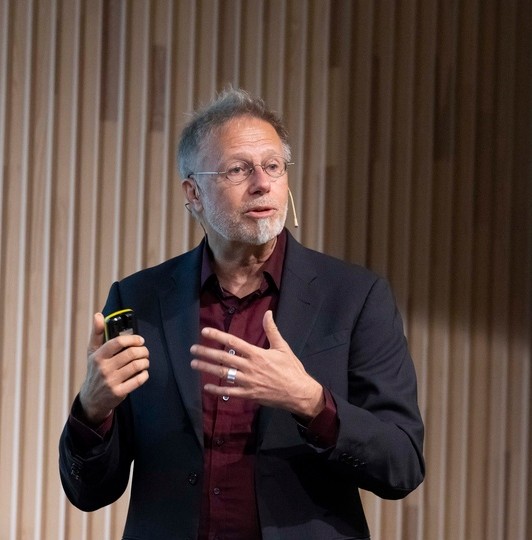
CV of the speaker
Michael Doser is a senior research physicist working at CERN, the European Centre for Nuclear Research in Geneva, Switzerland. He co-founded (in 2012) and led (until 2022) the AEgIS experiment working with antimatter atoms, and continues to focus on working with antimatter (formation of anti-atoms, study of matter-antimatter asymmetry, measurement of the gravitational interaction between matter and antimatter, exotic atom spectroscopy and nuclear physics), using it either as a tool or as an object of study itself. Since 2022, he has been exploring the opportunities provided by quantum sensing for particle physics and since 2024 is spokesperson of a globe-spanning collaboration of 115 institutes carrying out R&D on a wide range of quantum sensor families with the goal of developing these for fundamental physics. He has also been editor of Physics Letters B since 20 years.
Abstract:
The seminar will provide a glimpse of some elements of the rapidly evolving field of quantum sensing, with a particular focus on applications in particle physics. Specific approaches involving quantum systems, such as low-dimensional systems or manipulations of ensembles of quantum systems, hold great promise for improving high-energy particle physics detectors, particularly in areas like calorimetry, tracking, and timing. The use of quantum sensors for high-precision measurements, such as precision spectroscopy of novel atomic, molecular or ionic systems, as well as the development of new quantum sensors based on superconducting circuits, ion and particle traps, crystals, and nanomaterials, are equally relevant for low energy measurements that rely on high energy physics infrastructures. Significant advances and improvements in existing or future quantum


