


The three-year AI4QT (Artificial Intelligence for Quantum Technologies) project, implemented through Hungarian-German international cooperation, was successfully completed at the end of September. During the research and development activities, led by Győző Egri and Péter Boross from the Qutility group of Faulhorn Ltd, and Orsolya Kálmán and Zoltán Zimborás from the HUN-REN Wigner Research Centre for Physics, AI-based software tools were developed in collaboration with Germany's Fraunhofer IAF institute and XeedQ GmbH. These tools have the potential to significantly improve the accuracy and efficiency of quantum computers.
A key objective of the AI4QT project was to bring together artificial intelligence and quantum technology, with a particular focus on quantum computing and quantum sensing. The researchers and developers sought solutions to overcome the limitations of today's noisy intermediate-scale quantum (NISQ) devices.
Over the past three years, the Hungarian-German consortium successfully developed AI-assisted software solutions designed to improve the performance of these processors. The two most significant publicly available results of the project are:
- Simphony: An open-source Python package designed to simulate quantum registers and spin dynamics, with a particular focus on nitrogen-vacancy (NV) centres. The software functions as a noise-aware emulator, using GPU acceleration and machine-learning-based optimisation techniques (automatic differentiation) to support more accurate modelling and operation of quantum systems.
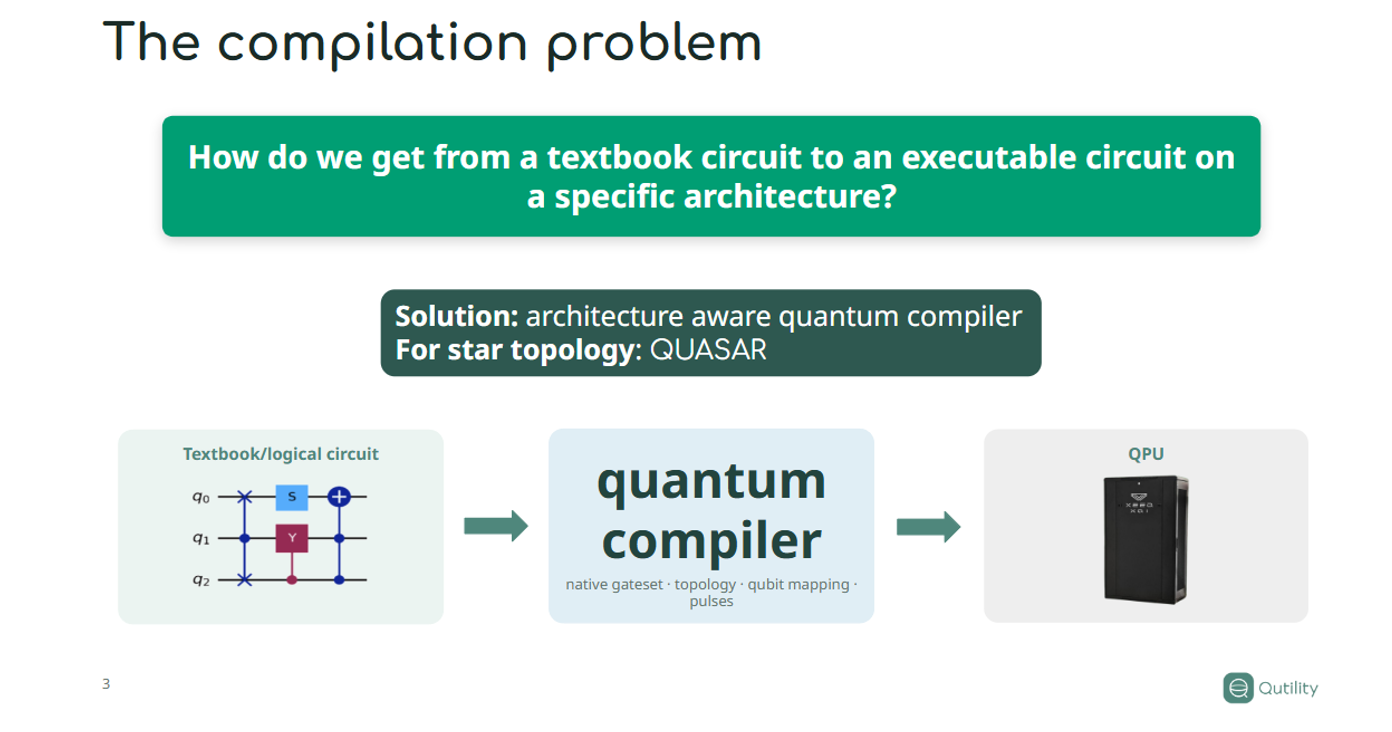
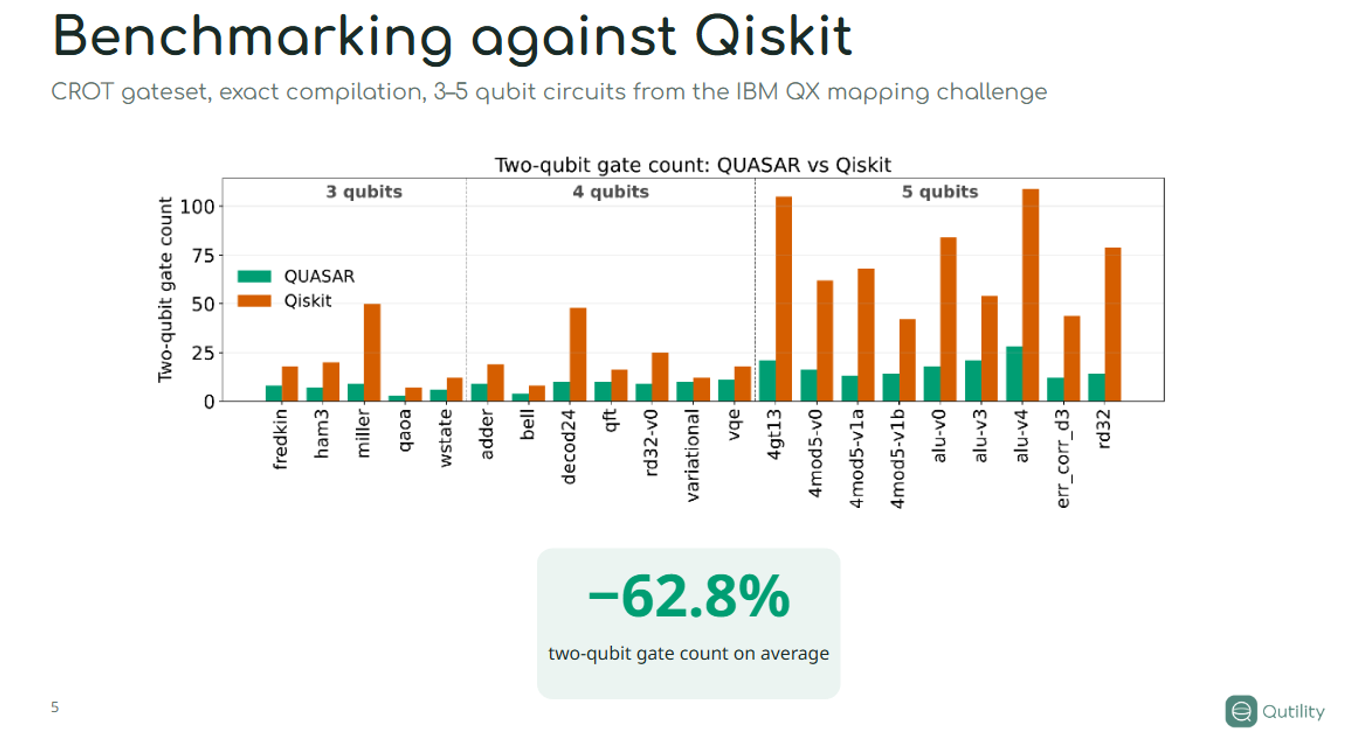
- QUASAR: A quantum compiler specifically designed for star-topology architectures. It can decompose and optimise quantum circuits into gate sequences and physical pulse sequences, an essential capability for the precise control of NV-centre-based quantum computers.
Another major pillar of the project focused on identifying and characterising errors in quantum processors. Researchers at the HUN-REN Wigner Research Centre for Physics, in collaboration with the Qutility group, developed methods to mitigate and compare errors in today's quantum computers. Such errors can occur during operations between quantum bits (qubits), known as quantum gates, as well as during the readout of results. To address readout errors, the researchers further developed a widely used error mitigation technique (Q-TREX), which provides unbiased results even when errors are not purely random. In addition, they tested a simple error-correcting code that can improve individual measurement outcomes by incorporating auxiliary qubits. The method increased readout accuracy on every IBM and Quantinuum processor tested. However, the use of additional auxiliary qubits proved worthwhile only on trapped-ion machines with lower gate error rates. A specialised test protocol developed to examine quantum gates also revealed that IBM's freely accessible machines may exhibit coherent, or systematic, errors, which can arise, for example, from inaccurate calibration of fundamental operations.
One of the important outcomes of the collaboration was the development of two new performance benchmarks: Clifford volume and free-fermion volume. In these benchmarks, a quantum computer must execute randomly selected sequences of operations whose correctness can be verified using a classical computer, even at large scales. Since the tests are independent of the specific architecture of individual machines, they enable fair comparisons across different platforms. The researchers benchmarked twelve processors from six manufacturers, including four trapped-ion and eight superconducting devices. The best result was achieved by Quantinuum's H2-1 machine, with a Clifford volume of 34. These new metrics help determine which quantum hardware is best suited to particular tasks and make it possible to track the development of quantum computers in a reliable and comparable way.
In addition to software development, the consortium also designed new algorithms that pave the way for the near-term adoption of quantum processors in real-world industrial applications, particularly in machine learning and sensor data processing.
Over the past three years, the consortium has published its research findings in numerous prestigious scientific journals and presented them at leading international industry forums. The researchers and developers hope that the innovations emerging from the AI4QT project will act as a catalyst for the development of the European and Hungarian quantum technology sectors, helping to bridge the gap between research laboratories and practical market applications.
Further information about the project, the software developed (Simphony and QUASAR), and the scientific publications is available on the project website: https://qutility.io/ai4qt.html
The research and development programme ran from 1 October 2023 to 30 September 2026 and was implemented within the framework of the EUREKA network (project ID: 2020-1.2.3-EUREKA-2022-00029). The Hungarian partners received a total of HUF 187 million in funding from the National Research, Development and Innovation Office (NKFIH).


