


Theoretical Solid State Physics
Theoretical Solid State Physics
 Department leader
Balázs Újfalussy
Department leader
Balázs Újfalussy
The department of Theoretical Solid State Physics is there to provide theoretical background to experimental and applied research. Also to perform, initiate and participate in world class theoretical research efforts.
Main fields of our reseach work:
- Determination of phase-diagrams of spin-ladders using density matrix- renormalization group method
- Mapping of the self-states of the one-dimensional attractive Hubbard- model using Bethe Ansatz
- Consequences of magnetic impurities in mesoscopic metals.
- Investigation of connections between two-level systems and various Kondo-models using renormalization group method
- Interpretation of the results of Raman-scattering with the help of the bilayer-model
- Investigation of magnetic anisotropy of thin layers considering the spin- orbit coupling, Kondo-effect, and relativistic effects
- Determination of atomic volume, and elastic properties of transition metals using full charge-density techique.
- Conditions of ferromagnetic order formation in lattice models. Investigation of the connection between Kondo lattice-and band ferromagnetism in correlated two-band model.
- Investigation of the dinamic exponents of non-equilibrium phase transitions in the kinetic Ising model.
- Determination of dinamic properties and self-states of Bose-condensed gases.
The staff of the department is traditionally participating in education, teaching Solid State physics at various levels.
Theoretical Solid State Physics
Department leader
Balázs Újfalussy
The department of Theoretical Solid State Physics is there to provide theoretical background to experimental and applied research. Also to perform, initiate and participate in world class theoretical research efforts.
Main fields of our reseach work:
- Determination of phase-diagrams of spin-ladders using density matrix- renormalization group method
- Mapping of the self-states of the one-dimensional attractive Hubbard- model using Bethe Ansatz
- Consequences of magnetic impurities in mesoscopic metals.
- Investigation of connections between two-level systems and various Kondo-models using renormalization group method
- Interpretation of the results of Raman-scattering with the help of the bilayer-model
- Investigation of magnetic anisotropy of thin layers considering the spin- orbit coupling, Kondo-effect, and relativistic effects
- Determination of atomic volume, and elastic properties of transition metals using full charge-density techique.
- Conditions of ferromagnetic order formation in lattice models. Investigation of the connection between Kondo lattice-and band ferromagnetism in correlated two-band model.
- Investigation of the dinamic exponents of non-equilibrium phase transitions in the kinetic Ising model.
- Determination of dinamic properties and self-states of Bose-condensed gases.
The staff of the department is traditionally participating in education, teaching Solid State physics at various levels.
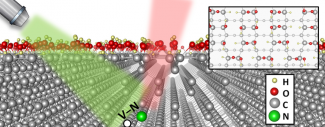
A Félvezető Nanoszerkezetek csoport kutatásait félvezetőkben illetve félvezető nanoszerkezetekben előforduló ponthibák kísérleti és elméleti jellemzésére fókuszáljuk. Új technikákat fejlesztünk illetve implementálunk, hogy adalékokat és hibákat jutassunk be félvezető (nano)szerkezetekbe, és vizsgáljuk azok tulajdonságait kísérleti és elméleti spektroszkópiával.
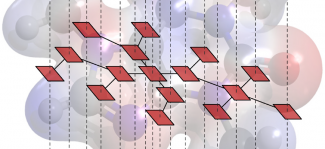
The main research activity of the group is to develop and use MPS (matrix product state) and TTNS (tree tensor network state) based methods for the investigation of strongly correlated quantum systems, such as graphene nanostructures, magnetic properties in solid states, exotic quantum phases, electron structures of molecules, or ultracold atomic systems.
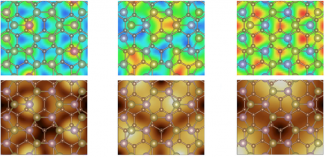
Our research group studies the properties of nanostructured materials, artificial and topological quantum systems, and superconducting heterostructures using diverse theoretical tools and numerical methods. At the same time, our research is also at the forefront internationally with its innovative approaches and the development of numerical simulation programs. In addition to theoretical modeling, our group also carries out experimental design, which aims to grow and characterize new alloys with promising properties.
Contact
Phone center: +36-1-392-2222
Secretary of the Director General: +36-1-392- 2512
E-mail: wigner@wigner.hun-ren.hu
Media contact: +36-30-487-9869


