English
 Magyar
News
12 February 2026 We announce the Muographers 2026, to be held 1-5 June 2026 in Budapest, organized by the HUN-REN Wigner Research Centre for Physics. Muographers 2026 will provide a focused scientific forum on the latest advances in muography, covering both fundamental developments and emerging applications. The program will emphasize, but will not be limited to, the following topics: (1) Next-generation instrumentation in muography (detectors, artificial muon sources); (2) Data processing and simulation methods (tracking, imaging, inversion, machine learning); (3) Fundamental and applied research using muography (Earth science, physics, archaeology); (4) Industrial and societal applications of muography (infrastructure monitoring, geotechnics, mining applications, nuclear safety and security, border control, positioning, navigation, timing); (5) Education, outreach, and art (muography challenge, high school projects, muography art). The conference will feature plenary lectures by leading experts, contributed oral presentations, poster sessions, and an instrumentation exhibition. An industry-oriented symposium and a training school for young researchers will complement the scientific workshop. Abstract submission (deadline is set to 1st March) and registration are open. Detailed information is available at: https://indico.wigner.hu/event/1727/ We warmly invite you to contribute and join us in Budapest.

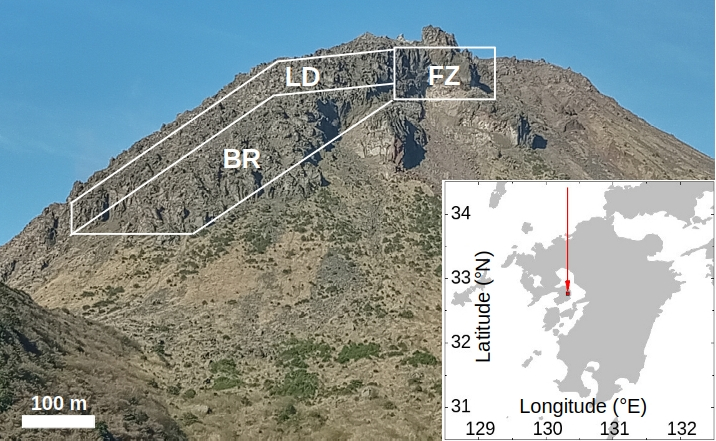
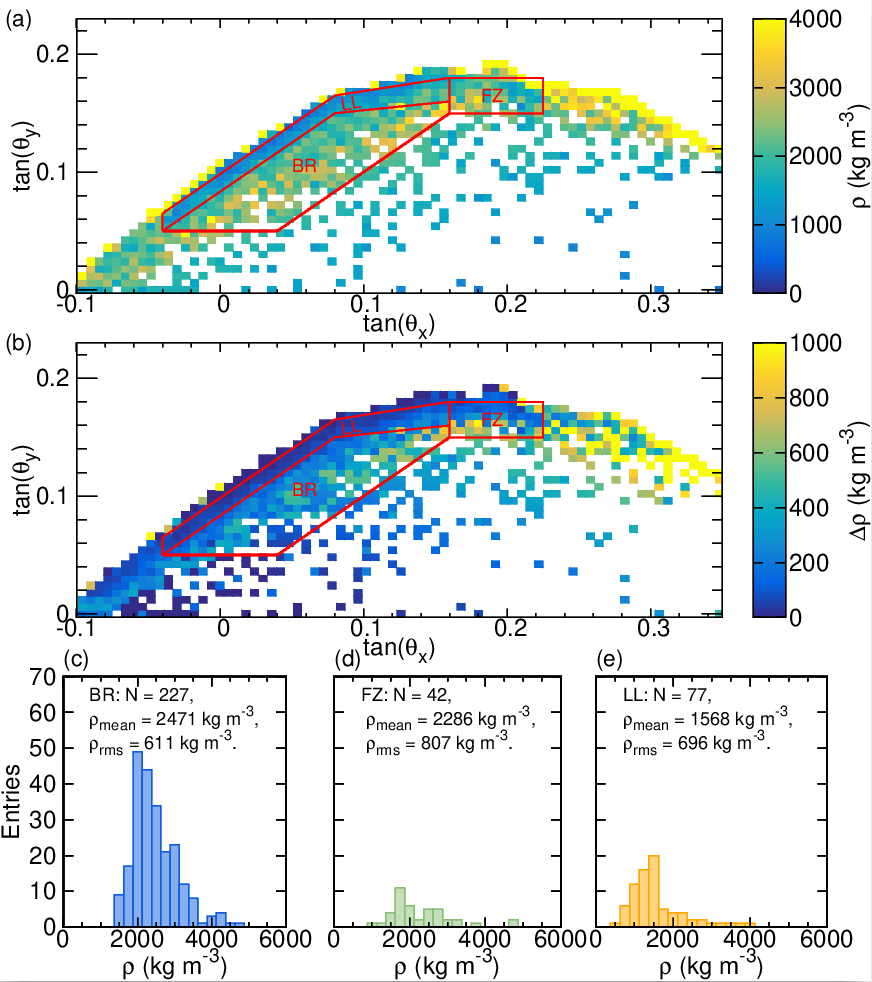
1 February 2026 Volcanoes can remain unstable long after eruptions, and weakened slopes may collapse, causing dangerous landslides. In this study, HUN-REN Wigner RCP and Sabo Frontier Foundation used a natural imaging technique called muography, which works like an X-ray by detecting cosmic particles that pass through the volcano. By monitoring Mount Unzen in Japan for several months, we created a detailed picture of its internal structure without drilling. The results showed that some lava formations are less dense than the surrounding rock, suggesting structural weakening after past eruptions. By comparing these measurements with rainfall data, we found no signs of rain-triggered instability during the study period. This work demonstrates that long-term muon imaging can help assess volcanic stability and improve landslide risk evaluation. Oláh, L., et al. Muography for structural characterization of volcanoes: a case study at Mount Unzen, Japan. Geophysical Journal International 244, ggaf482 (2026).
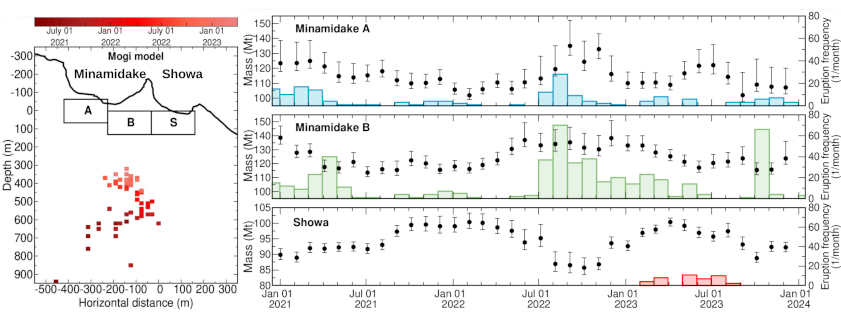
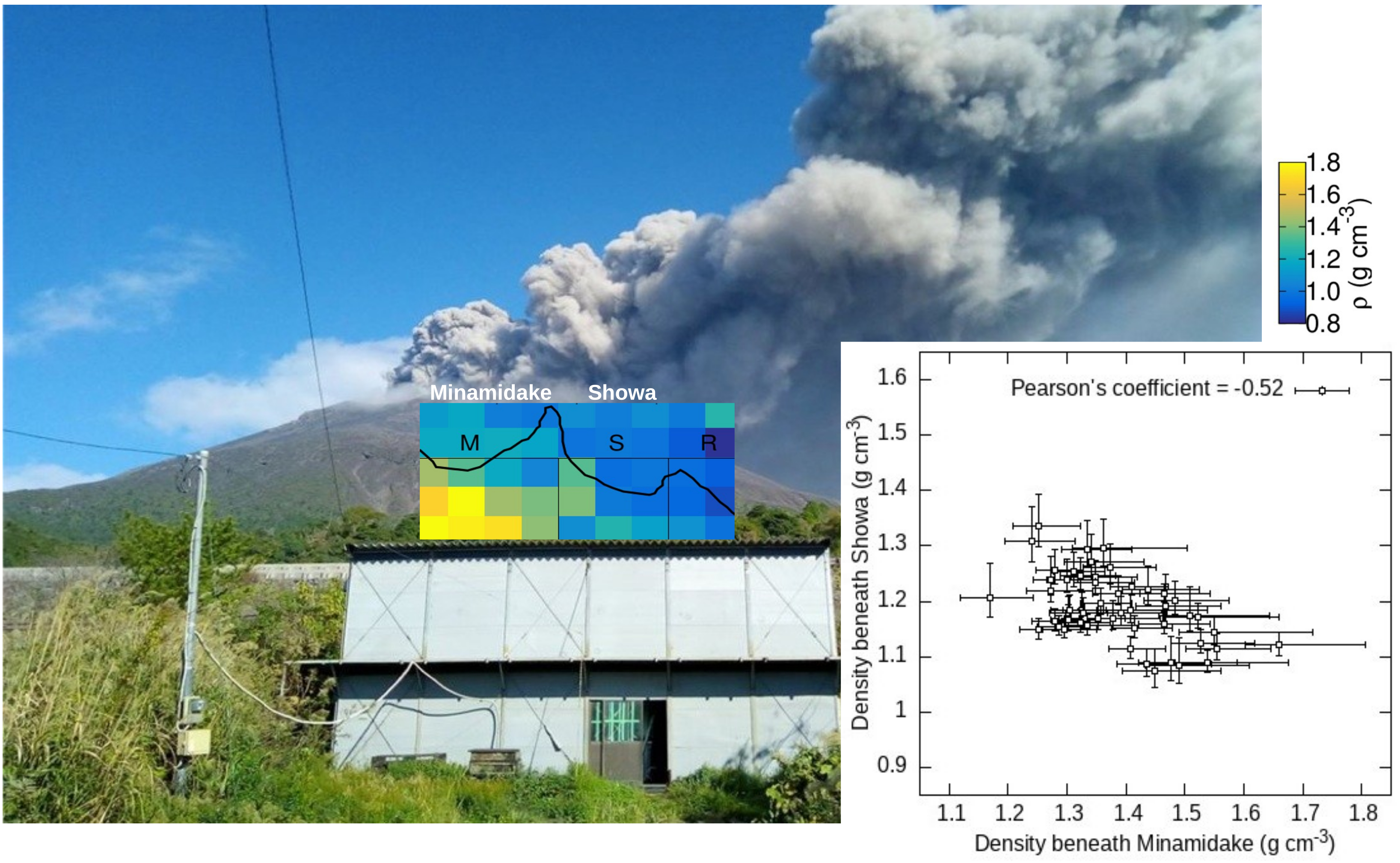
24 December 2025 We studied how magma moves inside Sakurajima volcano in Japan by combining satellite measurements of ground movement with muography, a technique that uses cosmic-ray particles to image the volcano’s interior. We observed that magma first moved sideways beneath the craters and later rose toward the surface, influencing which crater was active at different times. Our results indicate the presence of both a deep magma pathway and a shallow magma storage zone that feed eruptions at Sakurajima. The combined use of ground deformation data and muography shows promise as a complementary approach for monitoring shallow volcanic processes and gaining insights into eruption behavior. Oláh, L., Nakamichi, H., Ohminato, T., Tanaka, H.K.M., Varga, D. Magma migration beneath the active craters of Sakurajima volcano before the 2023 eruption of Showa crater inferred from ground deformation and muon monitoring. Earth Planets Space 77, 196 (2025).
20 October 2025 Andi Hektor (mu-ray.tech / MuRayTech and KBFI, Tallinn) CEO and co-founder of mu‑ray.tech, a deep-tech start-up developing muon beam imaging for industrial and medical diagnostics, give a talk entitled Building a Tabletop Muon Source: The Laser Plasma Accelerator Revolution at the Seminar of the High Energy Physics Department of HUN-REN Wigner RCP.
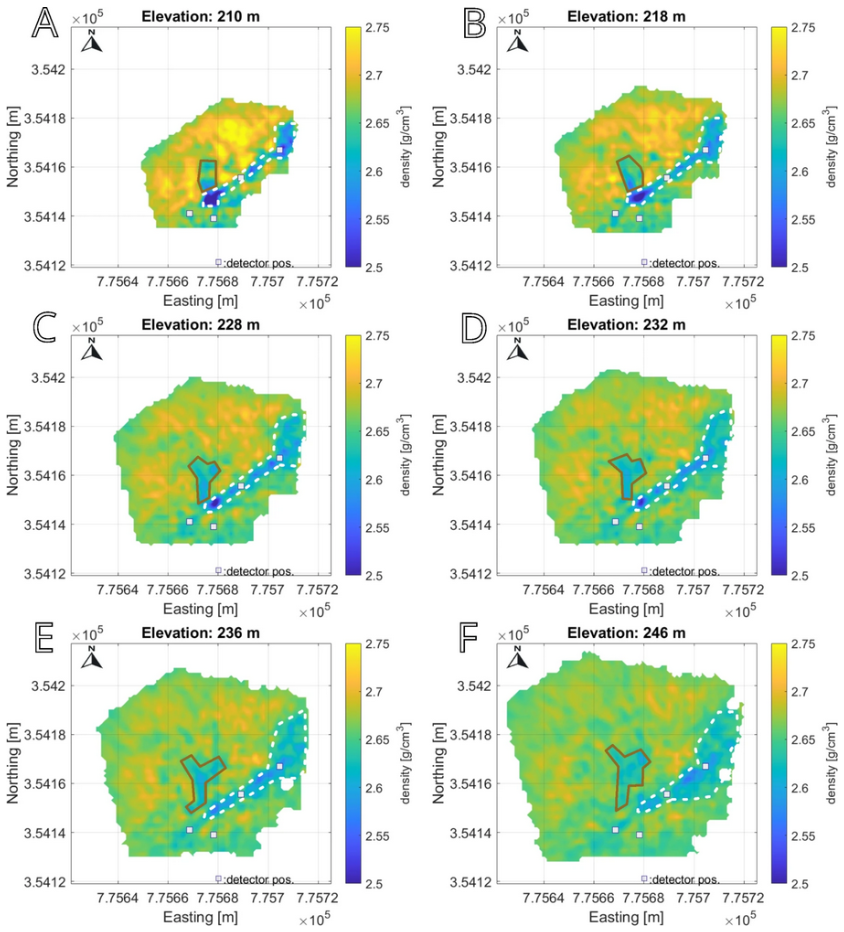
29 September 2025 Bence Rábóczki et al applied successfully muon tomographic methods to reconstruct a hidden void in the Esztramos Hill. Rábóczki et al published the results in Scientific Reports: Rábóczki, B., Surányi, G., Balázs, L. et al. Void discovery inside Esztramos Hill using muographic methods. Sci Rep 15, 33394 (2025).
21 August 2025 László Oláh and Hiroyuki K. M. Tanaka contributed to a recently published book entitled Modern Volcano Monitoring (Editors: Zack Spica and Corentin Caudron) in the book series Advances in Volcanology (Springer) with a chapter entitled Muography of Volcanoes.

14 August 2025 The review article written by László Oláh és Hiroyuki K. M. Tanaka about the application of muography and ground deformation monitoring for volcano monitoring was featured by Journal of Applied Physics. Furthermore, Ben Ikenson reported about the recent results in AIP Publishing Scilight.
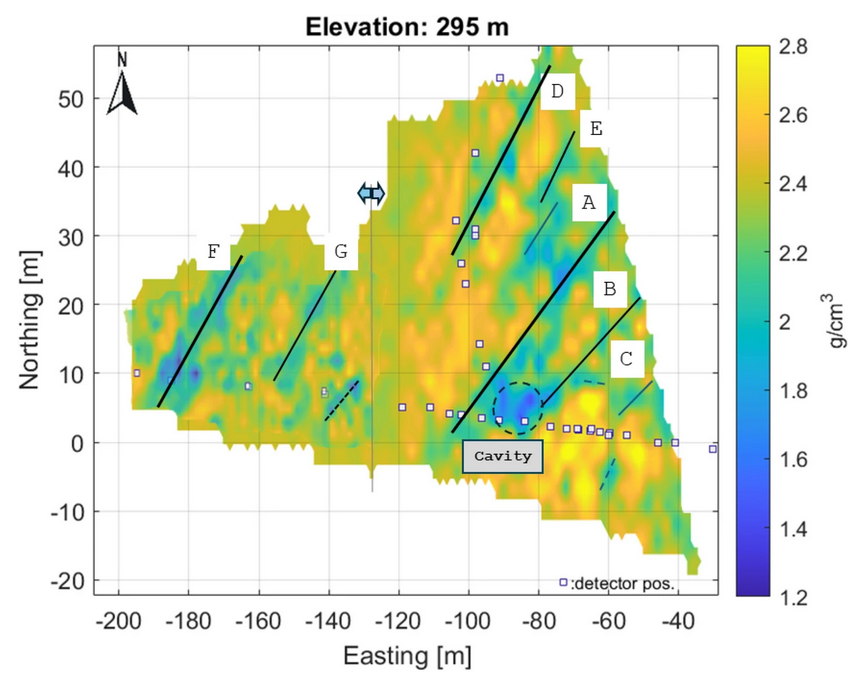
20 May 2025 László Balázs et al developed novel muon tomographic methods and applied successfully to reconstruct hidden fracture zones and cavities in the Buda Hill. Balázs et al published the results in Scientific Reports: Balázs, L., et al. Detection of fractured zones, faults, and cavities by high resolution muon tomography in the Buda Hills. Sci Rep 15, 17514 (2025).
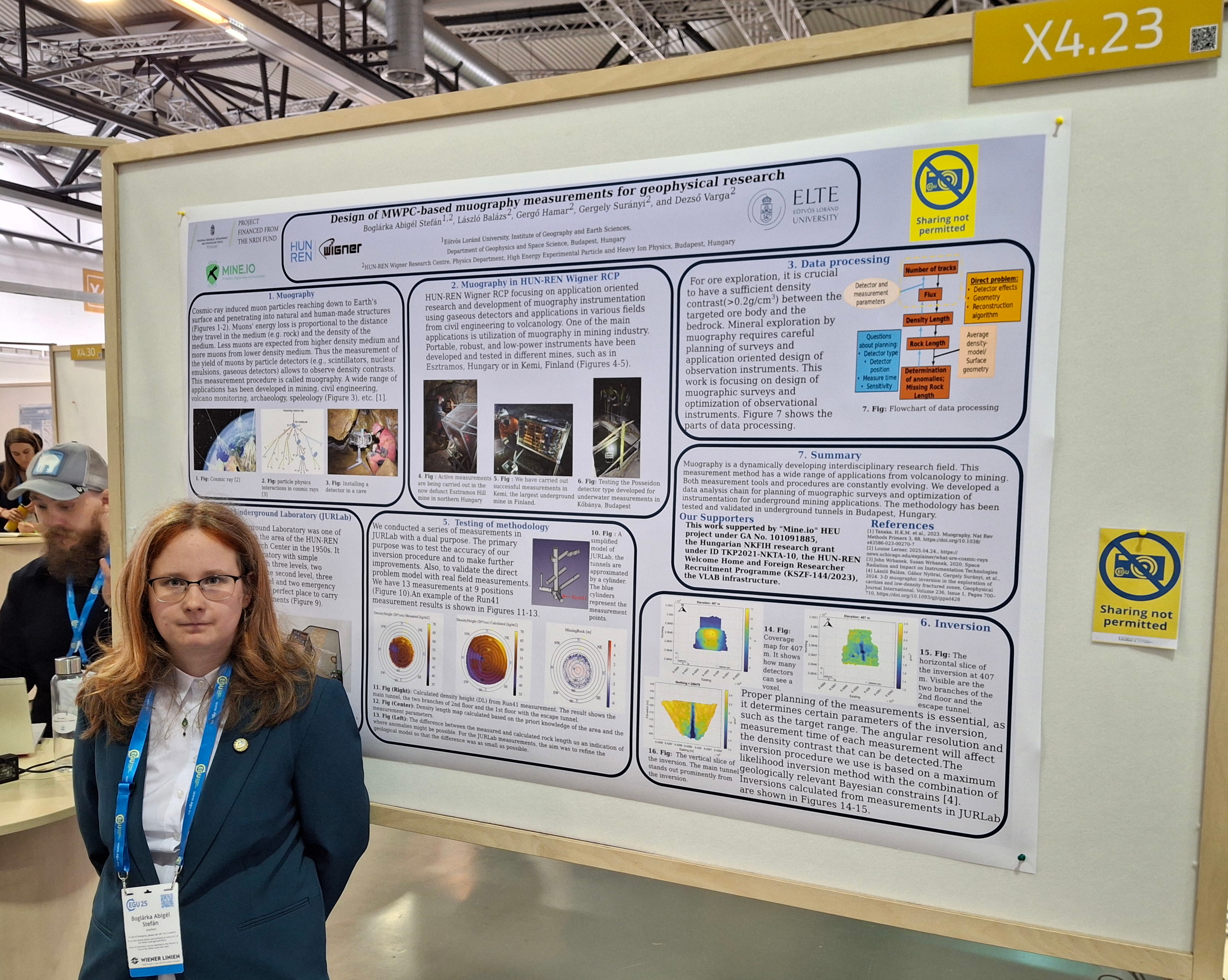
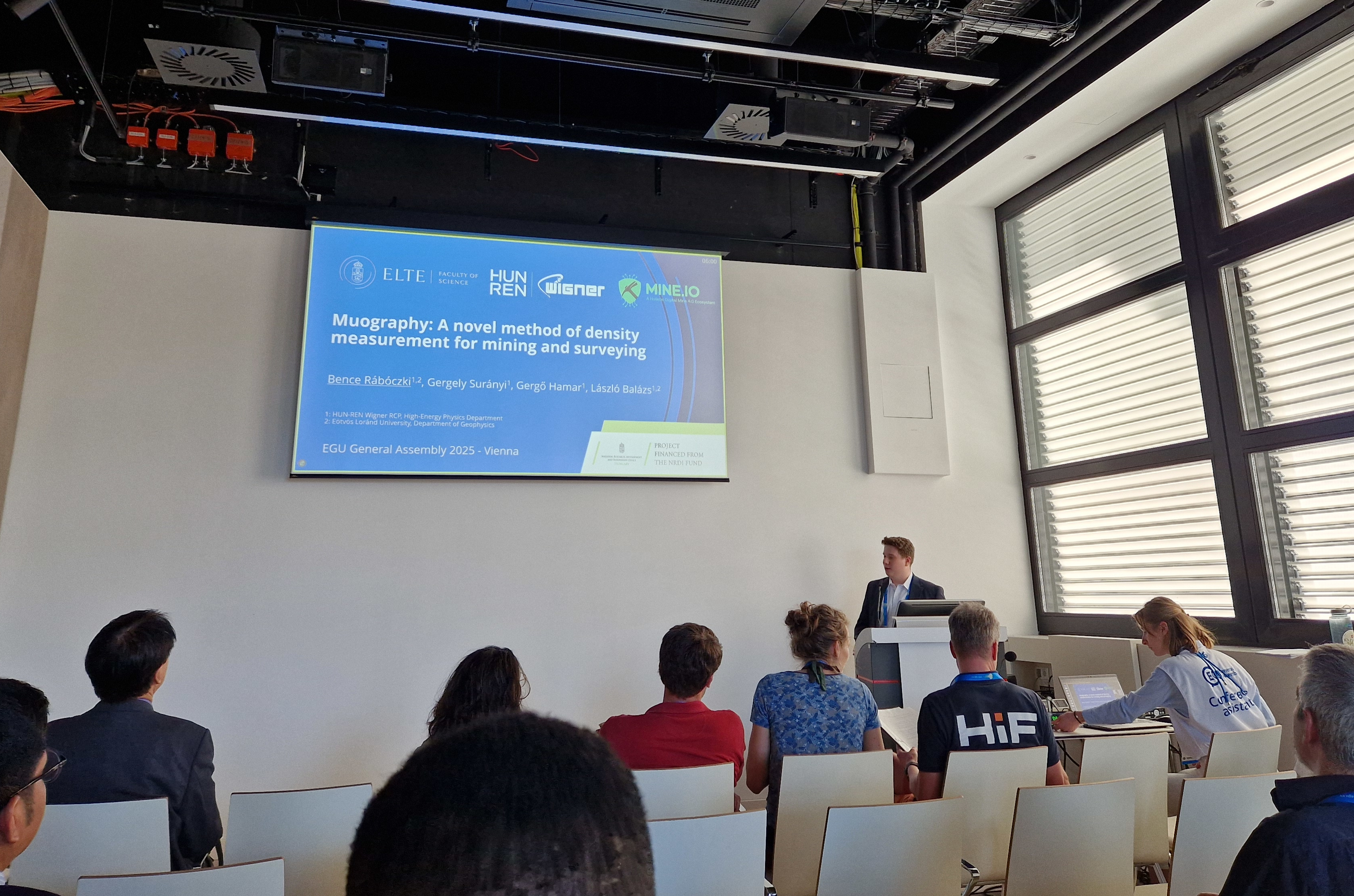
2 May 2025 Bence Rábóczki gave a talk and Boglárka Abigél Stefán presented a poster about the design of underground muographic measurements and their applications at European Geosciences Union 2025 General Assembly held in Vienna, Austria.
2025 April 10 Boglárka Abigél Stefán talked at the Girls' Day about muography, her research conducted in HUN-REN Wigner RCP and her experiences collected to date.
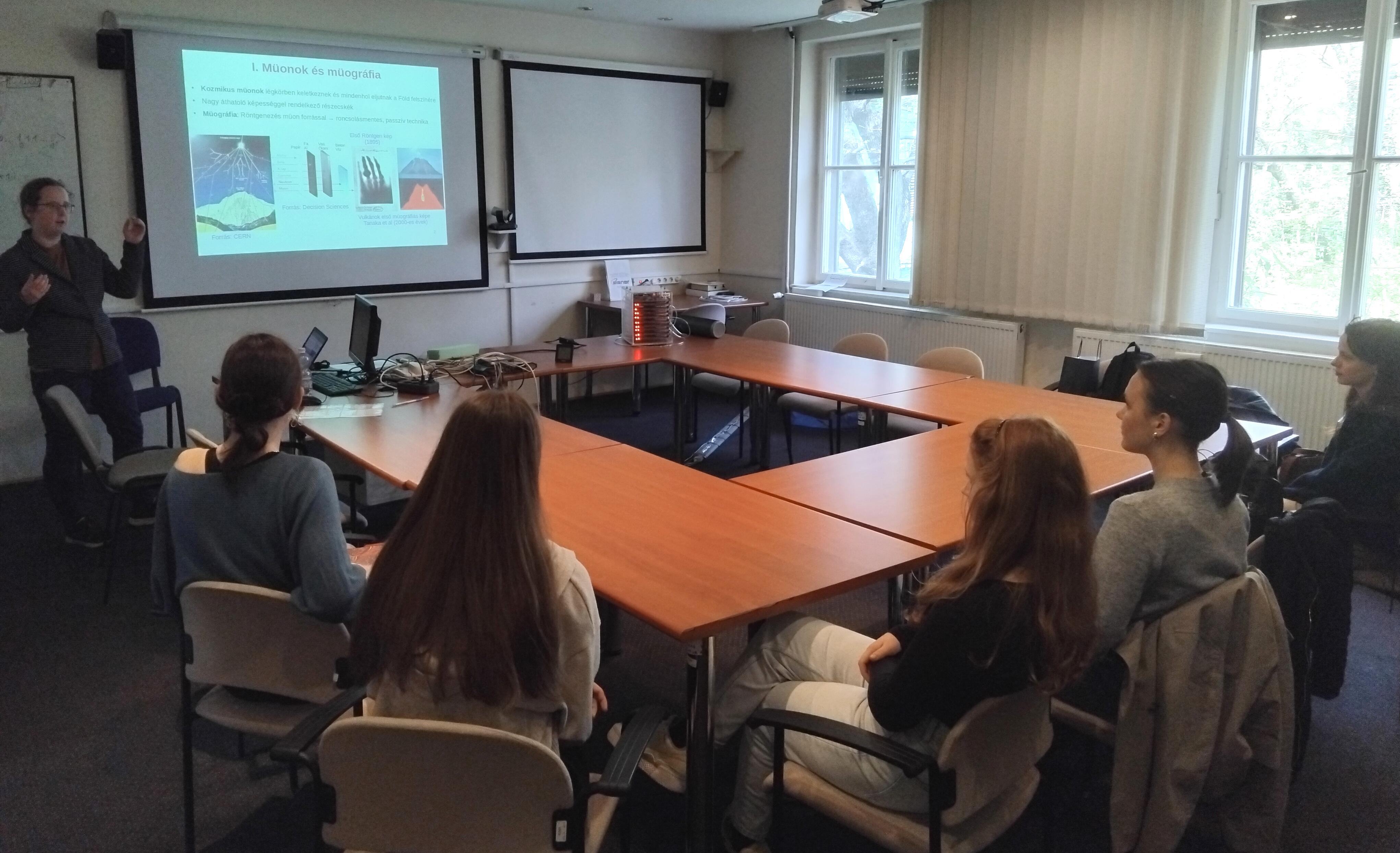
2024 december 14 András Toronyi (Supervisors: Dezső Varga and László Oláh) won a first prize at the Particle-, Heavy Ion- and Plasma Physics section of the ELTE TTK TDK conference with his work entitled "4PI muography". Furthermore, he won the special prizes provided by BlackRock és Morgan Stanley. Congratulations!
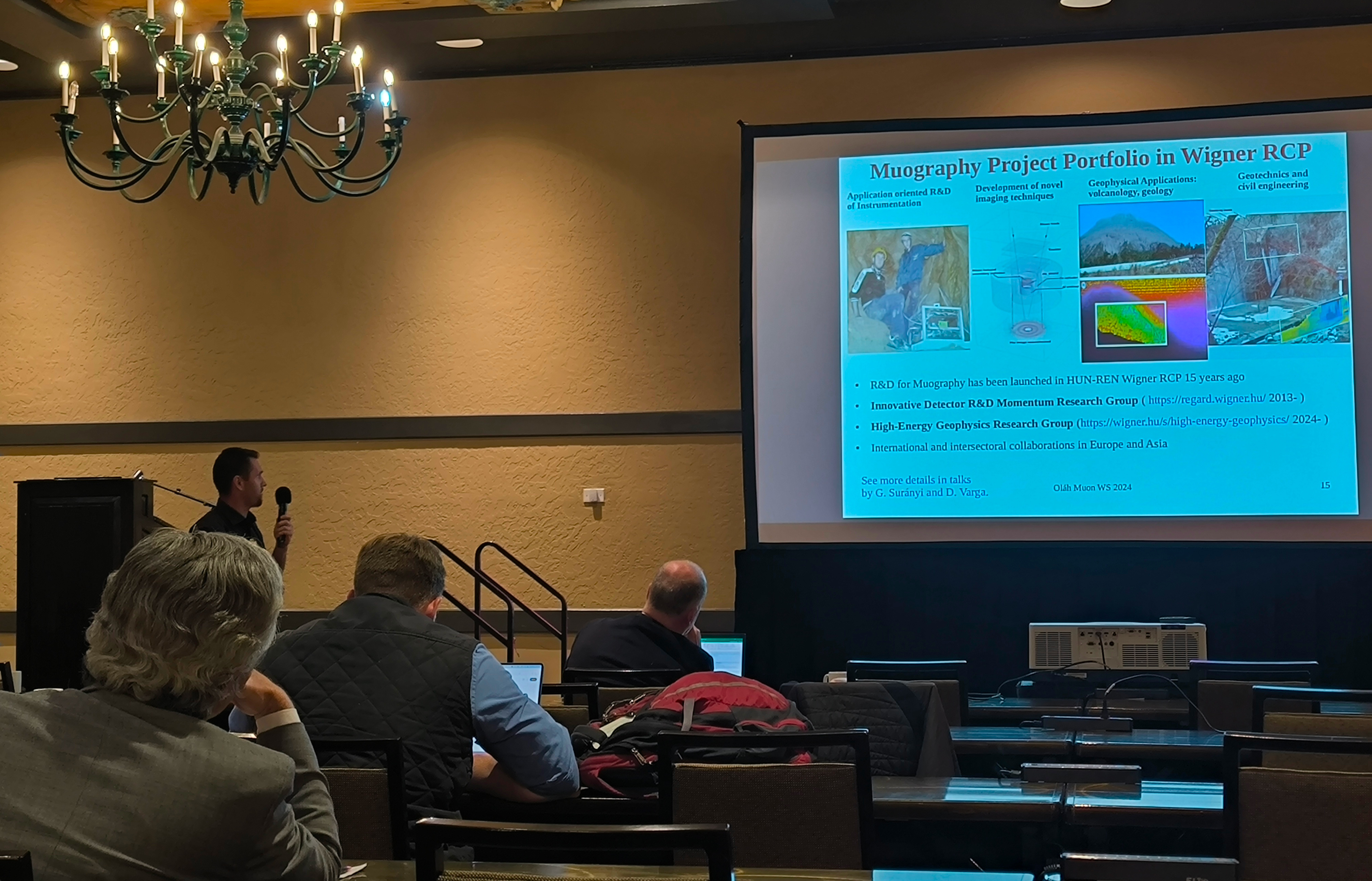
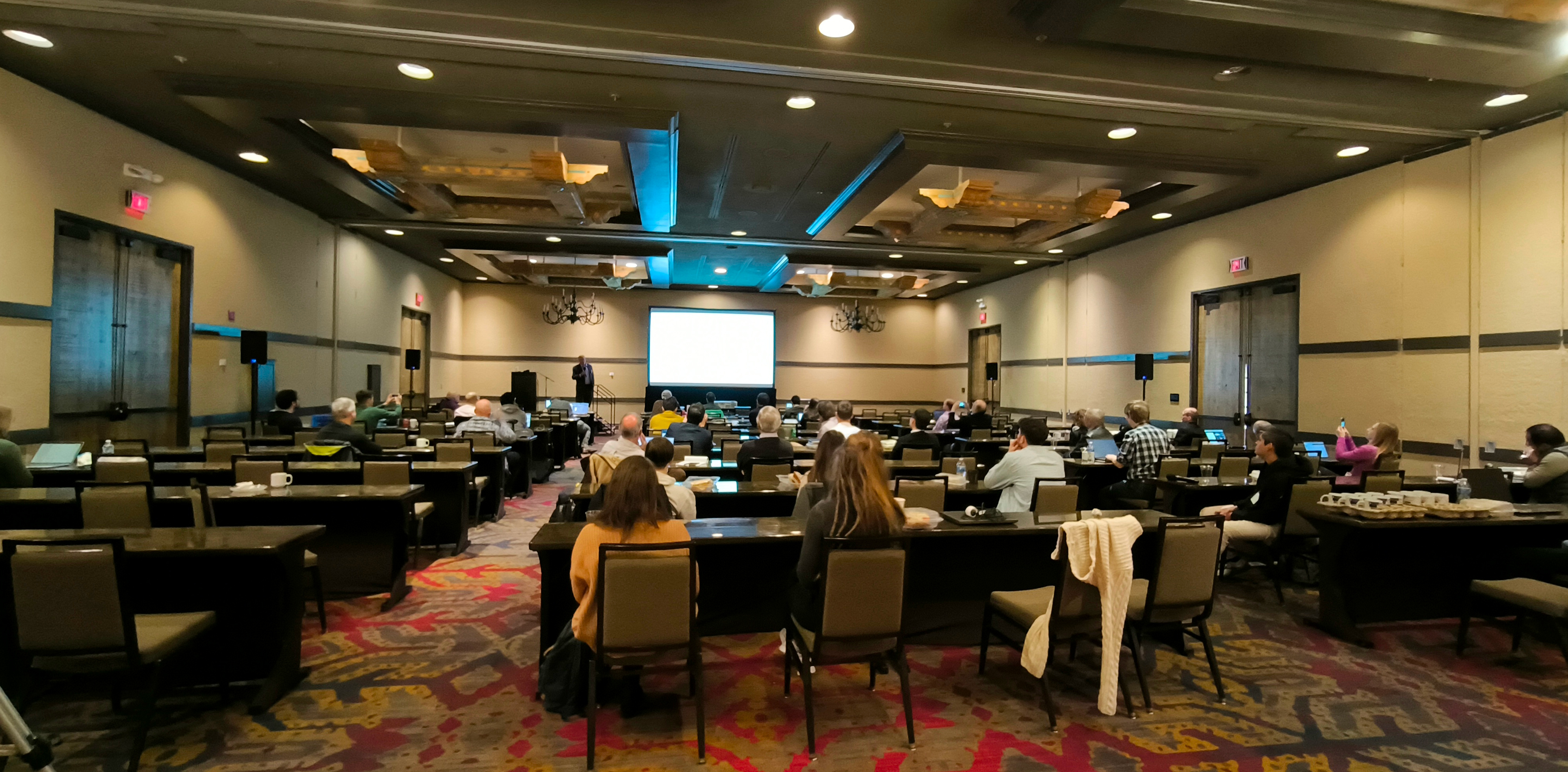
2024 November 8 László Oláh was one of the invited keynote speakers of Muographers2024 Workshop in Santa Fe, New Mexico with the presentation entitled "Studying Volcanoes and Oceanic Lithosphere with Muography". Two members of Innovative Detector R&D Momentum Research Group of HUN-REN Wigner RCP, Gergely Surányi and Dezső Varga talked about underground muography and muon positioning at the same event. We thank to Profs. Christopher Morris, Konstantin Borozdin and the organizer team for hosting the scientific community in Santa Fe!
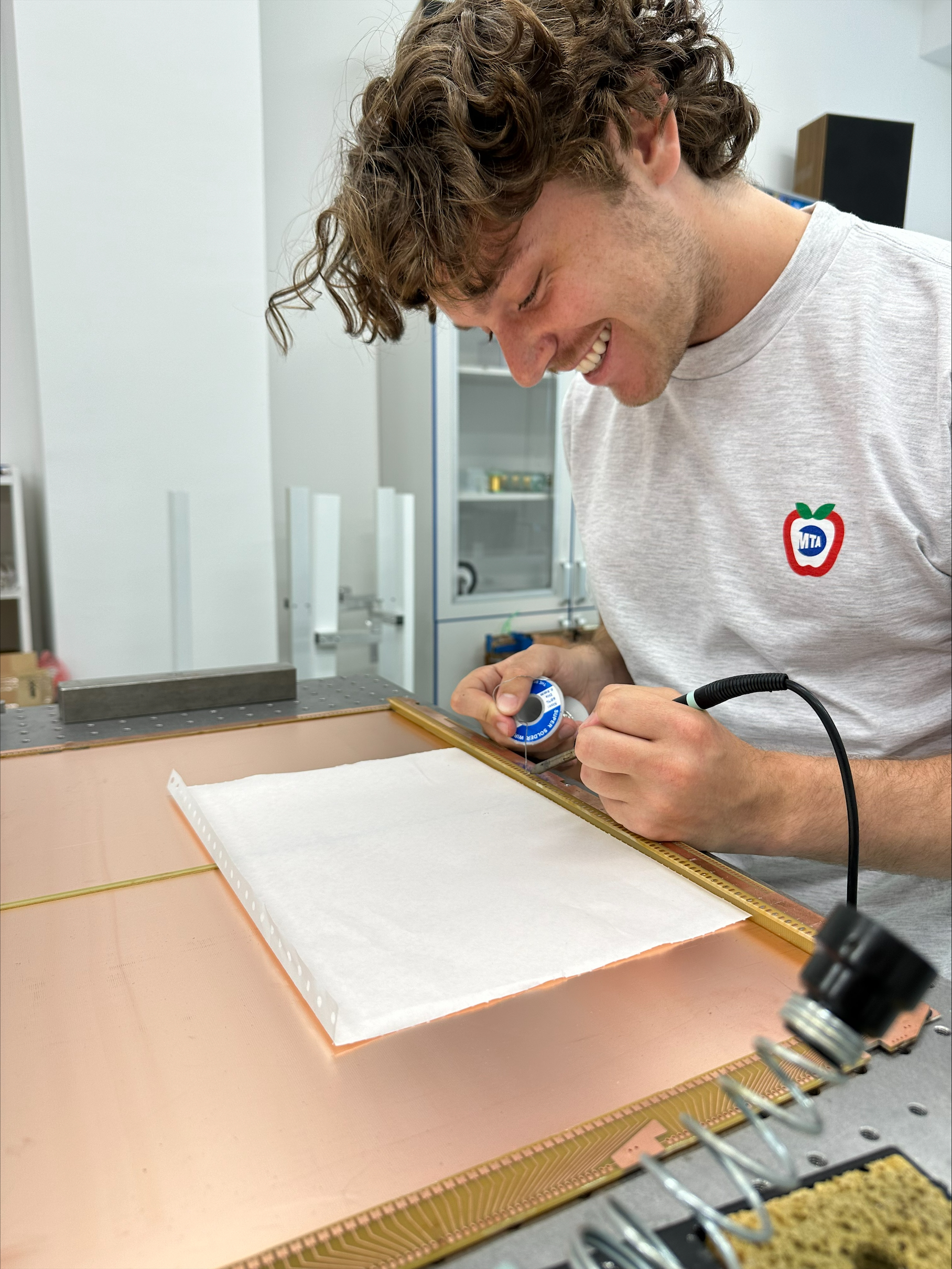
2024 August 10 Alexander Ordentlich (Bowdoin College, USA) completed his summer internship in the HUN-REN Wigner RCP in collaboration of our research group between 10 June and 9 August. Alex constructed and tested gaseous particle detectors and learned the basics of data analysis during the internship.
2024 July 22 Two members of our research group, namely Boglárka Abigél Stefán and Bence Rábóczki are awarded with state scholarships to do their PhD studies at the Earth Science Doctorate School of Eötvös Loránd University. Congratulations!
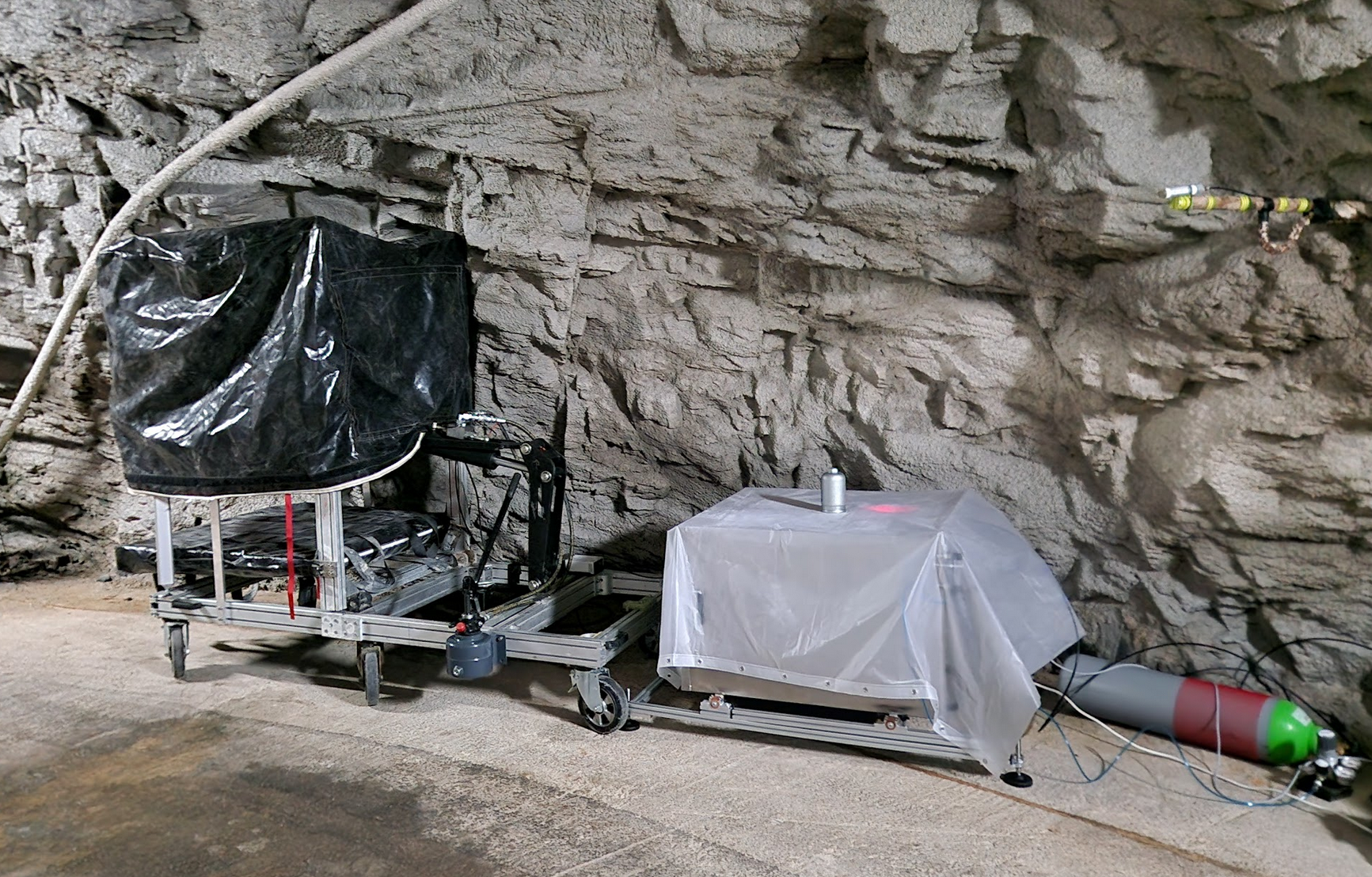
2024 June 20-21 A member of our group has contributed to the muon detector installation works conducted in Sos Enattos mine, Sardinia, Italy. The aim of muographic measurements is to explore the rock structure above the Einstein Telescope (ET) and to measure the cosmic background of the planned experiments.
2024 June 17 Konstantin Borozdin (Decision Sciences International Corporation and Sandia Research Center), a pioneer of muon scattering imaging gave a talk entitled Cosmic-Ray Radiography: History and Applications at the seminar of the High-Energy Physics Department of HUN-REN Wigner RCP.
2024 May 25 László Oláh was awarded the Jánossy Lajos Prize of Roland Eötvös Physical Society for his significant contributions to the development and application Sakurajima Muography Observatory for volcano monitoring, specifically for measuring plug formation, quantifying tephra deposition and erosion, and explaining the link between eruption frequency and ground deformation.
2024 April 6 The "Magyar Geofizikusok Egyesületének Ifjúsági Bizottsága" and the "Magyarhoni Földtani Társulat Ifjúsági Bizottsága" organized the "Ifjú Szakemberek Ankétját" in Egerben on 5-6 April. Boglárka Abigél Stefán és Bence Rábóczki presented their muographic researches at this conference. Bence got a 2nd prize in the Applications Section with his talk entitled "Exploring the inner structure of the Esztramos Mountain using muographic measurements". Congratulations to both Young Researchers and their supervisors, namely Gergő Hamar, László Balázs and Gergely Surányi!
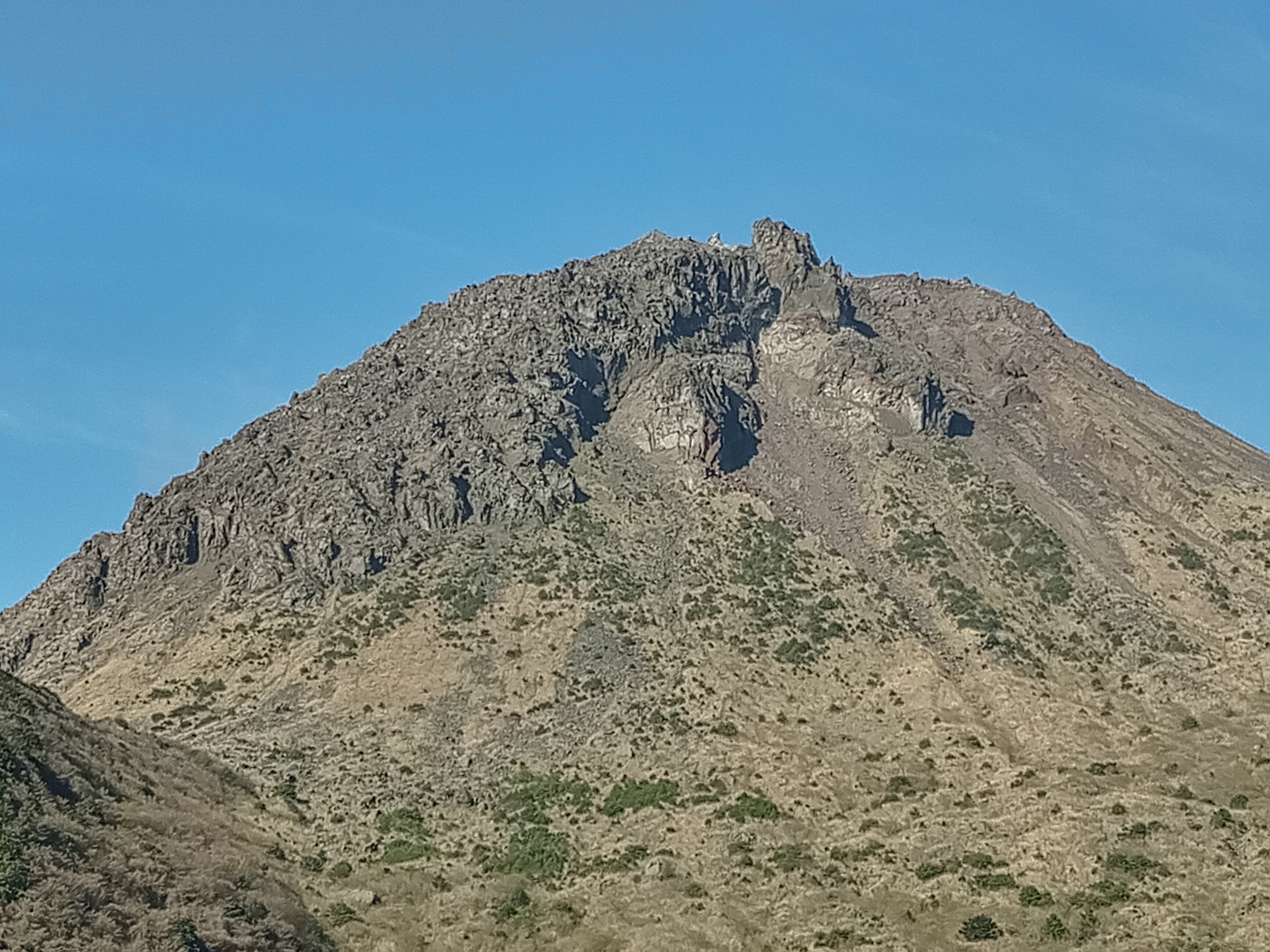
2024 April 2 From March 27 to March 29 two members of our research group installed an MWPC-based Muography Observation System (MMOS) at Unzen volcano, Japan. The muographic surveying will be conducted in collaboration with Sabo Frontier Foundation, Japan. The aim of the measurement is to charaterizing structural features of a lava deposit that is located on the peak of the volcanic edifice. This muographic surveying is expected to be contribute to the protection of surrounding area.
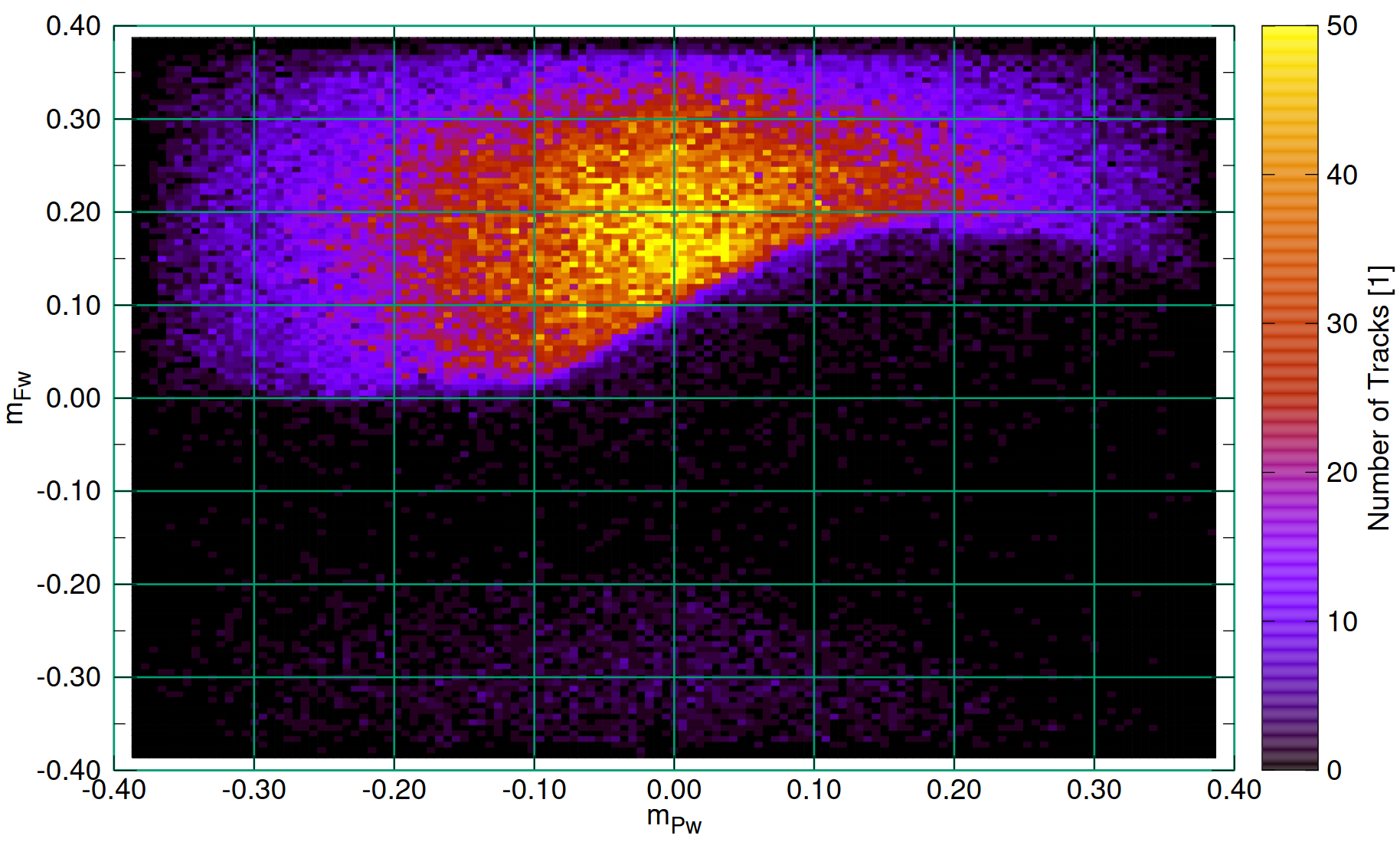
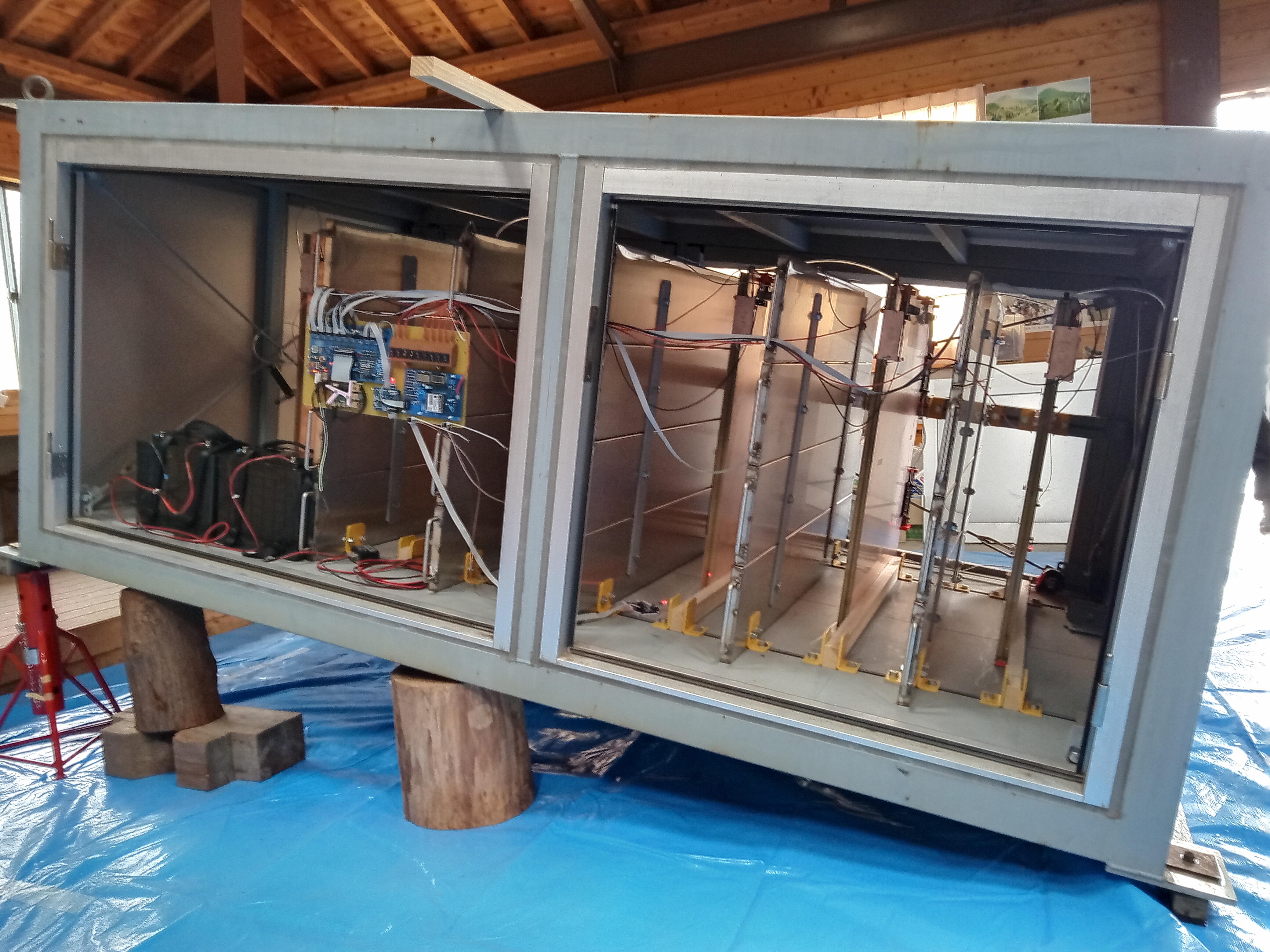
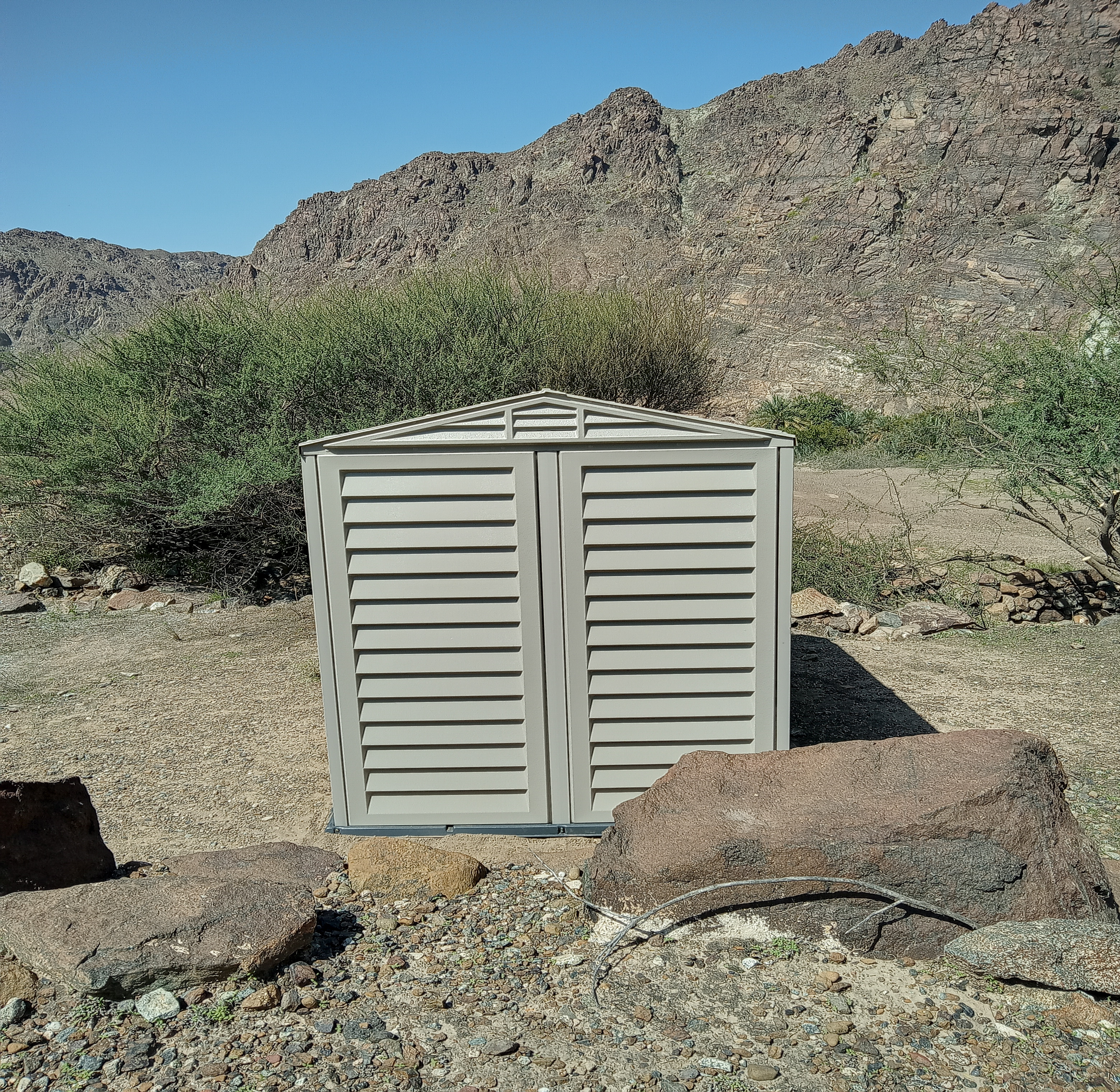
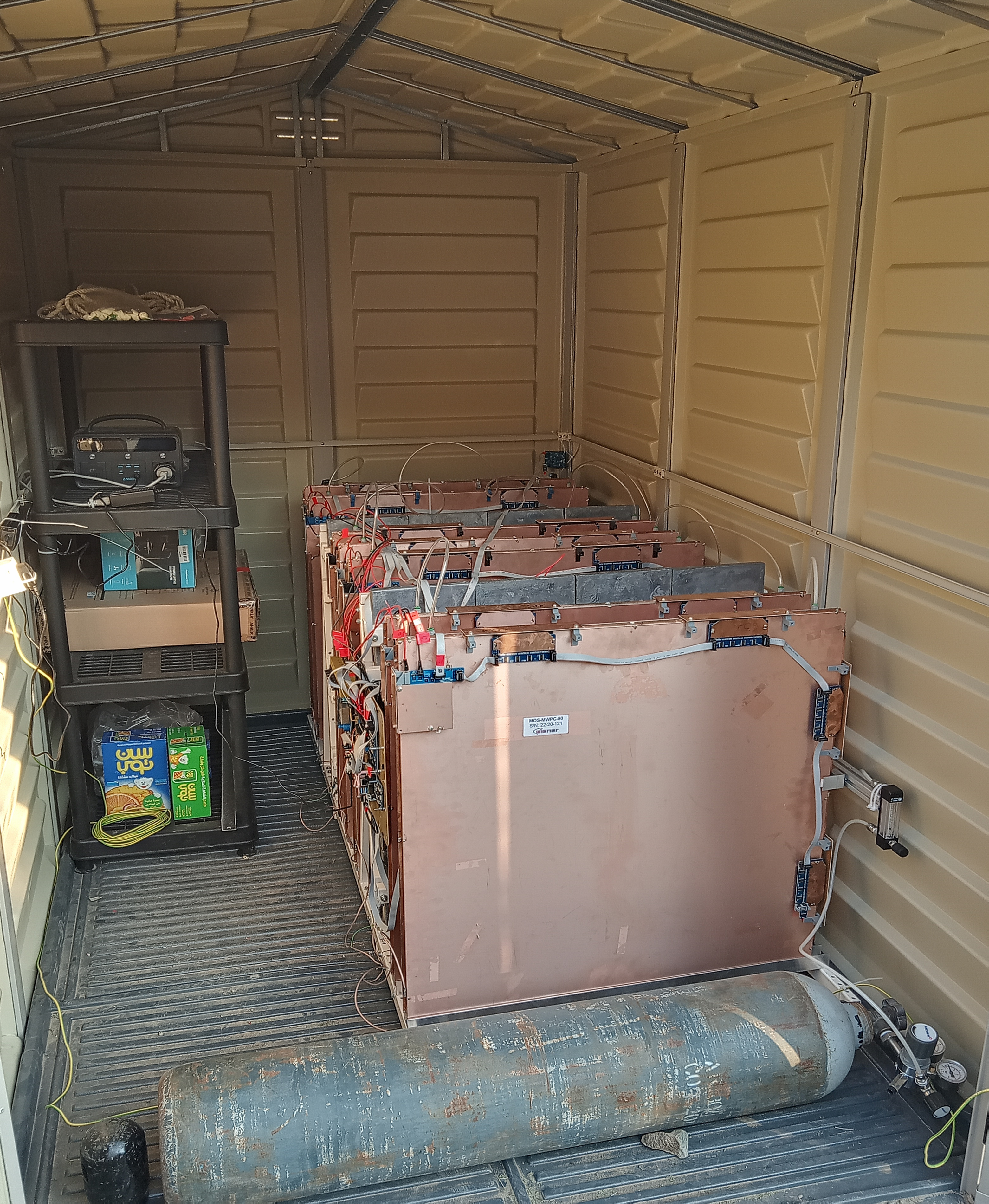
2024 March 1 From February 22 to February 29 two members of our research group installed an MWPC-based Muography Observation System (MMOS) at the Samail Ophiolite at Wadi Fizh, Oman. The muographic surveying will be conducted in collaboration with the Kanazawa University, Japan and the Ministry of Energy and Minerals (MEM) of the Sultanate of Oman. The aim of the measurement is to study the Moho transition zone located between the crustal and mantle layers exist in this ophiolite. The scientific background of this project has been published in the conference proceedings entitled " Plans for Muography of Samail Ophiolite " in Journal of Advanced Instrumentation in Science.
2024 January 1 The High-Energy Geophysics Research Group has been launched with the support of HUN-REN Welcome Home and Foreign Researcher Recruitment Programme 2023 (KSZF-144/2023).